
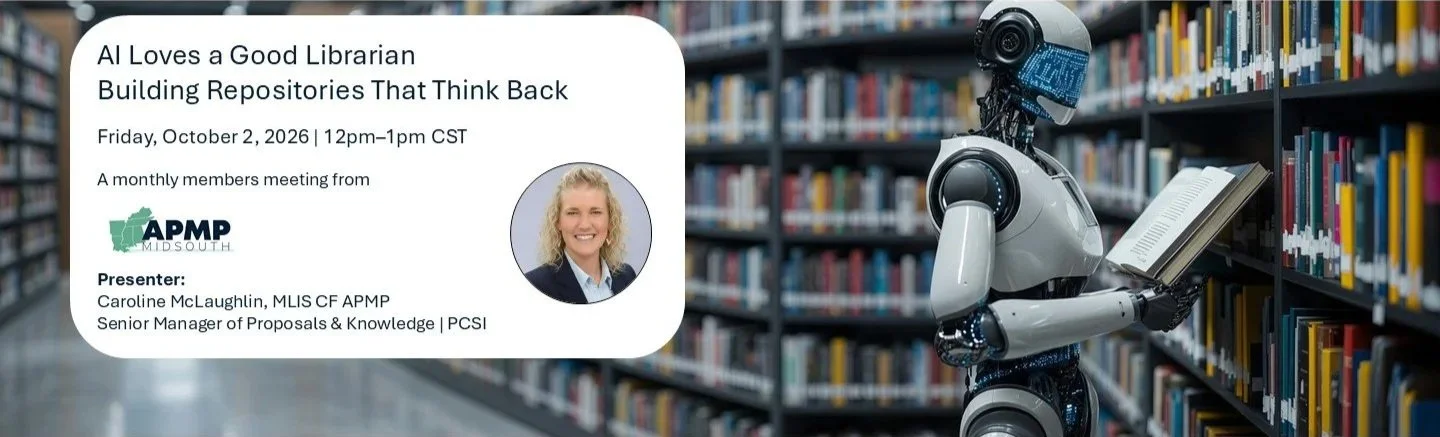
Everyone wants better AI. Few organizations realize they first need better knowledge.
Long before AI, librarians solved the challenge of helping people find the right information at the right time. Today, those same principles, organization, discoverability, context, and information architecture, are becoming the foundation of successful AI adoption.
Presented from a librarian's perspective, this session explores how to build AI-ready knowledge repositories that do more than store documents. Learn how to preserve expertise and context, structure content for retrieval, and create knowledge bases that support AI-powered search, analysis, and decision-making. The session will also demonstrate how organizations can build AI agents that retrieve and synthesize information from curated knowledge libraries.
You'll Leave With Ideas For:
Building AI-ready content and knowledge repositories
Preserving knowledge, not just boilerplate
Organizing information for better AI retrieval
Creating knowledge bases that power AI agents
Developing agents that answer questions using trusted organizational content
Using AI for research, insight generation, and decision support
Whether you manage proposals, projects, operations, content, or knowledge, you'll leave with practical ways to make your organization's expertise more accessible to both people and AI.

About the Presenter
Caroline McLaughlin, MLIS, is a proposal leader, knowledge strategist, former reference librarian, and self-described "corporate librarian" who spends her time teaching organizations how to find what they already know. As Senior Manager of Proposals and Knowledge at PCSI, she leads initiatives focused on knowledge management, content strategy, business intelligence, and AI readiness.
With a Master of Library and Information Science, graduate studies in Information Architecture, and certification as a Microsoft Office Specialist Expert, Caroline approaches AI through the lens of information science. Her work focuses on building AI-ready knowledge ecosystems, improving discoverability, preserving institutional expertise, and transforming decades of organizational knowledge into strategic business assets. She believes the future of AI is not about teaching machines to write, but about teaching organizations how to structure, manage, and leverage what they already know.